Showing posts with label Pontiac. Show all posts

Wednesday, December 21, 2011

Happy Winter Solstice 2011!

2011's Winter Solstice occurs just after midnight tonight, 12:35 EST, but I'm not sure if that means today is the shortest or tomorrow, lol. At any rate, the days will VERY soon become longer. YES! I know Winter hasn't even begun yet, but I know now that Spring is just 8-12 weeks away, a time I can start walking around outside and see which of the perennials have made it through the winter and which didn't. 

Illustrated here is my chop of the now-defunct Pontiac Solstice, a very eye-catching little convertible roadster. I decided a couple of years ago to create this sedan with a full roof and the name "Winter Solstice" just seemed perfect for it. Stonehenge in the background welcoming the winter sun. I might have posted this very illustration for LAST year's Winter Solstice. With these short days I find myself with less and less inspiration! I'm sure that will turn around soon, too.

Friday, November 26, 2010

1931 Pontiac: "Chief Jalopy?"

Cardboard window filler optional. As was tread on the tires, apparently! At least the owner had an AAA membership.

V I N T A G E   P H O T O S — Written underneath these photos in the album I found them in is, "What a car." I don't remember anyone in my family ever talking about a 1931 Pontiac sedan, so I think it might have been borrowed or possibly belonged to a friend. The photo was dated 1946, making this car 15 years old at the time and a survivor of wartime metal drives. The lack of tread on the tires is a result of the times as well—I'd bet the owner had to use those tires for the duration of the Second World War, and even afterwards, rubber was in short supply. I'm pretty sure the inscription was sarcastic, judging from the bald tires, dented fenders, missing spare tire and the cardboard covering a broken window in the rear door. Even though it is, at first, a jalopy, a closer look shows it was rust free, and would be considered an "easy" restoration today. It's interesting that this '31 has a dividing trim piece on its radiator grille, as the divided grille would become a Pontiac trademark from 1959 until its recent demise in 2009, with very few exceptions.

Pontiac was introduced in 1926 as a companion marque to GM's Oakland division, but outsold the parent line almost immediately and replaced it completely in 1932. This '31 sported an L-Head (flathead, sidevalve) six cylinder engine, making 60 horsepower, a step up from a Ford Model A's 4 cylinders and 40 hp. The '31 offered a 112" wheelbase, also a step above the Ford's 106 inches. Beginning the next year, Pontiac offered its first straight-eight engine, basically the Oakland unit from the year before, and Ford rewrote history with its famed flathead V8.

• There is this one, too.
• And here's the Wiki for Oakland-Pontiac.

Wednesday, November 17, 2010

Still Feelin' Pontiac-y: Orphan Brand "My" Way.

For some reason, I've been in a Pontiac mood this afternoon. I just finished the Vibe GT chop, above, started last year when Pontiac was still a living/breathing/kicking GM division. Oh well! I "hid" the rear door handles in the window frame, a la Nissan and Alfa-Romeo, enlarged the rear window, lowered the roof, upgraded the wheels and tires (from a Dacia concept vehicle), and generally cleaned up the body lines.

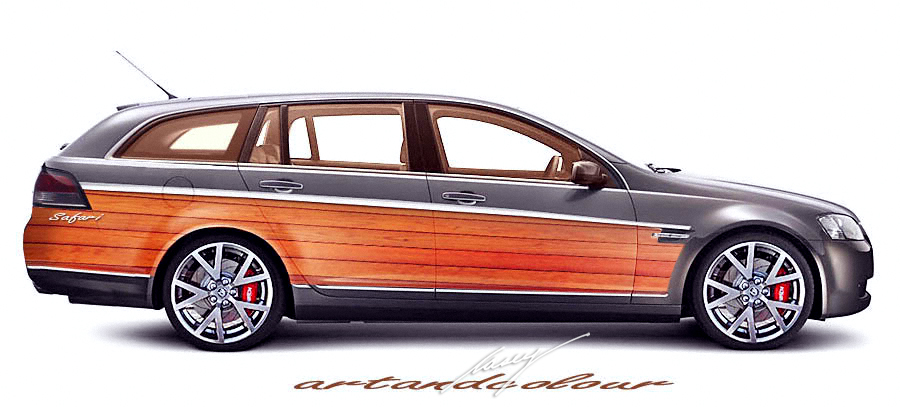
This is my Safari version of the late, lamented, G8 sport sedan. I used the Australian Holden wagon as the base, but lengthened the rear overhang by approximately six inches for more cargo room. Safari was a long-used name for Pontiac's wagon offerings.

The metal-roofed sedan version of the Solstice roadster, the Winter Solstice, lol. I was sort of shocked when I finished this. It wasn't nearly as awkward looking as I thought it would be. 

Another version of the Toyota/Pontiac Vibe hatchback. I added a set of fender vents to this version, extending into the front doors, and totally deleted the rear door handles. The doors would be accessed via key fob only, powered open and closed "suicide" style.

A four door "coupe" for GM's Excitement Division, the Ventura, another classic Pontiac name from the past. Again, I added fender vents, but cleanly incorporated them into the hood's side edge. I also added a chrome molding to the sides, "hiding" the door handles in the process, another classic styling touch used through the years. The "arrowhead" Pontiac logo on the side, intersecting the chrome upper body molding, would be a European-type side marker light. Pontiac has a history of backlit logos, hood ornaments and rear lettering, so this Pontiac side marker light would have been appropriate.

Lastly, one of my favorite chops of all time, my New Aztek makes its third appearance in my blog, lol. I mashed up a new Acura ZDX with original Aztek styling cues, such as the grille/hoodscoops, triple side strakes, tripe-spoked wheels and fender bulges complete with body cladding. Pontiac often featured flashy/odd styling for its specialty cars, the TranSport and original Aztek come to mind, so I think they might have jumped on the 'Sports Activity Coupe" bandwagon, a la the ZDX and X6.

In a Pontiac Mood—'68 Firebird Scale Model

This Revell plastic scale model kit of the '68 Firebird 400 dates back to only 2001. It's a reissue, meaning it had been available earlier, probably when the car was new. Even though this Firebird was really a Camaro with a very slight facelift with Pontiac engines, their styling is in my opinion, one of the best offerings on any Pony car ever built. The front end is very grown up, and all of the elements are resolved nicely. The "ironing board" on the hood is perfectly proportioned and the hood scoops on this 400 model couldn't have been more perfect. The side and rear are pretty much standard Camaro with trim changes, but this first series of GM's F cars was beautifully rendered, every bit as classy as GM's larger offerings during this period. The tacky era of the late seventies Camaro was still quite a bit in the future.

1969 Pontiac Owner's Manual: Another Era!

Cover of the Owner's Manual for the 1969 Pontiac line, including the full sized Bonneville and Catalina, Grand Prix, Tempest/GTO, and the Firebird. Pontiac's classic "arrow" logo is present.

M Y   C O L L E C T I O N — My Dad came home with a brand new Liberty Blue 1969 Pontiac GTO, back in the spring of that year. The car came with a 400 cubic inch V8, with Pontiac's classic engine architecture, years before GM started using generic engines in its divisions' cars. It also came with a 4-on-the-floor manual transmission, a HUGE step backwards in my mother's view, and a very deep bass V8 rumble that could be heard, and felt, a 1/4 mile away. Mom couldn't fathom the concept of paying more for a transmission and still getting a manual, though. The car suffered from some production woes, the stick shift actually working itself from its housing and ending up in my father's hands, completely separated from the transmission, lol. He kept this very loud GTO for close to two and a half years and traded it in on a '72 LTD Brougham coupe.

The Liberty Blue GTO that was in our family when new. The car soon sported chrome Cragar SS wheels, lifted air shocks in the rear, and a painted white cowl stripe just in front of the doors, wrapping over the hood and down the other side, a la the Oldsmobile 442 from that period. Looking back, it was all overkill. This car is gorgeous in its standard tires and wire wheel covers. So clean and so pure, the classic Sixties Pontiac look.

Posted below are some pages scanned from this manual, which apparently stayed with the family when the car was sold. I probably hid it! Compared with my current car's manual, which consists of three books in a leather-lined case with 3 CDs as well, this quaint, seventy-two page paper booklet measures 8 1/4 x 5 1/4. It seems so simplistic, evocative of a simpler time I suppose, but I remember my mother talking about the Thirties in that way when I was growing up. Perhaps we all look back to the time of our childhood and feel it was simpler because, as children, we led a simple life!

The full sized Pontiac dashboard instructions. All images clickable to an easily readable size.

The brand-new-for-69 Grand Prix utilized this wraparound instrument panel. Very chic!

The Tempest, and our GTO, shared this dashboard design. I seem to remember a strip of wood near the bottom. 

The slightly facelifted Firebird's panel diagrammed.

A typical page, this one showing how to work the various power options. The tortured typesetting is really bad! I'm not sure of the typesetting system used in '69, fully 12 years before I began my publishing career. Perhaps some form of hot lead, or some other "manual" system? 

Tuesday, October 19, 2010

'Twas Not to Be. Pretty Colors, Though!

An extremely stylized, never-to-be, 2012 Grand Prix. created a couple of years ago. I was already trying to retro the '80s with this contemporary personal luxury coupe. In retrospect, at least the colors really work in this rendering...

Friday, July 2, 2010

Pushing Pixels Longer, Lower and Wider: My Newest Version of an Accord 4 Door Coupe

Consider this the "production" version of the Honda concept I chopped a few years ago and posted in this blog last Sunday. 

C H O P — Starting with the recently revealed, updated 2011 Accord coupe's publicity shot below, I created this 4 door version. In addition to the extra set of doors, I used a few tried-and-true tricks of the trade to help visually lower and widen the car, the raison d'être for this newest automotive niche, non? 

The rocker panels are darkened to lessen the height of the body color portion, creating less mass to visually lower the car. I've also altered the configuration of the taillight lenses, a small-but-important change, imo. Notice the character line on the sides of the body. It cuts through both sets of door handles. On the production coupe, it ends at the point where the taillight lens begins. I've allowed it to continue on around the back of the car by dividing the taillights into a red and a clear section. The top part of the taillight len, above the character line is now clear, and is matched by a new brushed aluminum trim piece on the trunk lid. This serves two purposes: First the red part of the lens, or the 'heavy' section of the lens is lessened, making the taillights appear lower and wider, helping the car itself seem lower and wider. Secondly, the clear part of the lens, which would house the amber turn signal bulbs (or LEDs) and the reversing lamps, is tied in with that new car-wide trunk molding. Having a lighter-colored portion of the trim not only go the full width of the car, but visually wrap around the sides, helps lower and widen the car, again, by lessening the amount of solid body color metal that continues from the ground to the roof. By continuing that strong swage line all the way around, cuts the visual thickness of the body, creating a lower look as well.

The rear doors now incorporate an almost triangular quarter window, necessary for the door glass to retract fully, but also somewhat evocative of its crossover cousin, the Acura ZDX. I think if Honda could mimic Mercedes in adopting the 4 door coupe bodystyle, it could also 'steal' a cue here and there from its own sister division, Acura.

Recently introduced 2011 Accord Coupe, the base photo for my 4 door version above. Notice how the taillight lens configuration really doesn't work with the lines of the body itself, a situation I rectified in my chop. Why don't 'real' stylists think about the details like I do, lol?

BTW:
Speaking of the Acura ZDX above, my newest readers may not have seen my chop of it. I created a new (now never to be produced, lol) Pontiac Aztek using the new Acura crossover as a base. To partially answer RW's question of which are my favorite chops, I have to say this is one of my 'em, for its kitsch value more than anything else. I posted this creation in the early days of this blog, but I won't even make you follow a link back to it, here is is, complete with the Aztek's formerly trademark body strakes, tri-spoked wheels, ribbed taillights and lovely double-level snout and head- running-lights! This is the answer to a question no-one dared ask. No one but artandcolour that is! : )

What happens when you mash up one of 2010's oddest styled cars, the ZDX and one of the oddest styled cars from nearly ten years earlier, the Aztek? The answer is a fairly attractive crossover, though admittedly still quite oddly styled! And YES, I would have made sure the tent option remained.

Saturday, April 17, 2010

This is Ground Control to Major Tom . . . Pointalicious Pontiac Prototypes

2011 Pontiac Ventura, stillborn midsize four door "coupe" from GM's er, um,  Excitement Division. Click all photos to enlarge.
2011 Pontiac Tempest, would have been replacement for slow-selling G6 Coupe.
2011 Star Chief luxury sedan, larger G8 platform with 400hp, awd and hybrid option.

C H O P S — Oh, what might have been from Pontiac, GM's grand old division that was given it's pink slip last year. These chops were done when there was still a little bit of hope for Pontiac to make the cut, and have a long future. It didn't. It won't.

Sunday, February 21, 2010

Is There Still a Tent Option?

C H O P — Ain't gonna happen now that Chief Pontiac has been sent packing, but this is what could have been the Aztek II. 

This is the epitome of a fun chop. The original Aztek was unanimously assailed for it's er, um, interesting style—pre- and post-facelifted versions. The brand-new Acura ZDX seems to be taking over that same reputation, perhaps most kindly expressed as WTF? So there was only one thing to do—mash 'em together. My Aztek II is an oh-so-current awd crossover coupe, with classic 'Tek cues such as the 3 spoke wheels, triple door strakes and the quad grille intakes. No word on whether or not the camper option, with the fold-out tent, would have been carried over. You can't help but smile when you see this mutt!

 
B T W :
A N  E A R L I E R   C A M P E R   O P T I O N — The Kaiser Traveler (above) of the late '40s–early '50s, America's first hatchback sedan, had a rare camper and tent option. Both my father and his brother owned 1948-50 Kaisers. My dad owned the 2-tone Traveler in the photo above and my uncle's was the monotone sedan. Both cars looked pretty much the same on the exterior; the Traveler's rear driver's side passenger door was welded shut at the factory so the spare tire could be mounted on it, but looked normal from outside; there was an additional cutline that went up and over the rear lift-up glass; an extra handle on the trunklid to pull down the tailgate section. The cutline over the rear window and the handle on the trunklid to pull down the tailgate are apparent in this photo.

Though considered somewhat 'blobby' by later periods' sense of aesthetics, Kaiser-Frazer was one of the first postwar designs to feature full-through fenders, or slab sides. No discernible front or rear fenders were pressed into the sheetmetal. The '49 Ford also featured a full envelope body like this, but GM and most other mfrs hedged their bets with faired-in front fenders and still-visible rear fender seams/bulges.

Kaisers were priced like Oldsmobiles but equipped like Chevys, which made them a bit harder to sell. They were built like tanks though, which appealed to my dad and his brother. They were also large cars with a wheelbase of about 123 inches. Full sized Fords and Chevys of the period were only 115 or so. K-Fs came with Continental L-head 6 engines of about 100 hp. The Frazer part of Kaiser-Fraser, sold cars with the same basic chassis, and very similar bodywork, in  upmarket trim, including one of the few postwar 4 door convertibles.

Friday, February 19, 2010

Birth of the Bonnie


B / W   N I K O N / F I L M   I M A G E  Detail view of the '57 Pontiac Bonneville front fender trim and spinner wheelcovers. The Bonneville was a special model in this it's first year, equipped with almost every option Pontiac offered, including a fuel injected 300+ hp V8 (as scripted on the fender in the photo). It listed for more than $5700 (REALLY expensive for a Pontiac back then-Cadillac territory for sure) and only about 630 examples were ever sold according to most sources. I took this photo on film with a Nikon camera in 1980 at a local car show. This beat-up image is scanned from an old-fashioned contact sheet. I never had the negatives printed, and it's REALLY hard to find reasonable b/w printing in the 21st century. BTW, cars like this go for $100,000+ these days.